Each of our games asks for a slightly different skill, but a handful of habits help across all of them. These are the ones our crew swears by.
Look before you let go
The single most useful habit across the whole canal, in every one of the six games, is to pause before acting. In Lock Flight Golf that means reading the walls and gates before dragging back. In Rosepaint Pop it means checking which piece is holding up a cluster before shooting. In Towline Treasures it means imagining where the next piece might appear before sliding the board.
That pause does not need to be long. A second or two is often enough to notice an angle or a danger you would otherwise miss. The games are built so that thinking is rewarded: none of them punishes you for taking your time, and only Towrope Trail asks you to react on the move.
If you find yourself making the same mistake twice, slow down further. Most repeated errors come from habit rather than difficulty, and a deliberate pause is the easiest way to break a habit without changing anything else about how you play. Think of it as checking the lock is full before you open the gates: a tiny delay that saves a great deal of bother afterwards.
Build from a corner and keep it tidy
Several of our games reward working from a fixed starting point outwards. In Towline Treasures, strong boards almost always keep their highest piece in one corner and build a chain along the nearest edge. In Lockkeeper’s Tiles, solving the top row and left column first leaves you with a smaller, simpler puzzle each time.
Even Towrope Trail, the liveliest game on the canal, benefits from this idea. Keeping your rope close to the walls early on leaves the middle of the grid open for later, when the rope is long and room is scarce. Untidy play works for a while, but it always runs out of space sooner than a tidy plan.
The lesson is the same everywhere: decide where things belong and protect that structure. It feels slower at first, but it leads to longer rounds, bigger scores and far fewer moments where everything collapses at once. A tidy board is also easier to read at a glance, so each move after it becomes quicker to choose.
Use walls as friends, not enemies
Two of our games are all about bouncing. In Lock Flight Golf, the brick walls of each hole are often the best route to the cup, letting you reach a hole hidden around a corner. In Rosepaint Pop, the side walls let a piece slip into a gap that a straight shot would clip on the way.
Practise bank shots deliberately, the way a new boater practises steering into a lock before the busy season begins. Take a few putts on an early hole aimed purely at learning how the ball leaves a wall, or play a level of popping where you try a bank shot every turn. You will quickly develop a feel for angles that pays off in every round afterwards.
Remember that energy is lost with each bounce. A firm putt can survive two walls; a soft one may stop after the first. Judging that loss is the difference between a ball that drops and one that rolls tantalisingly short. Watch where your misses stop and adjust the next putt by a little, rather than swinging from far too soft to far too hard.
Train your eye for patterns and words
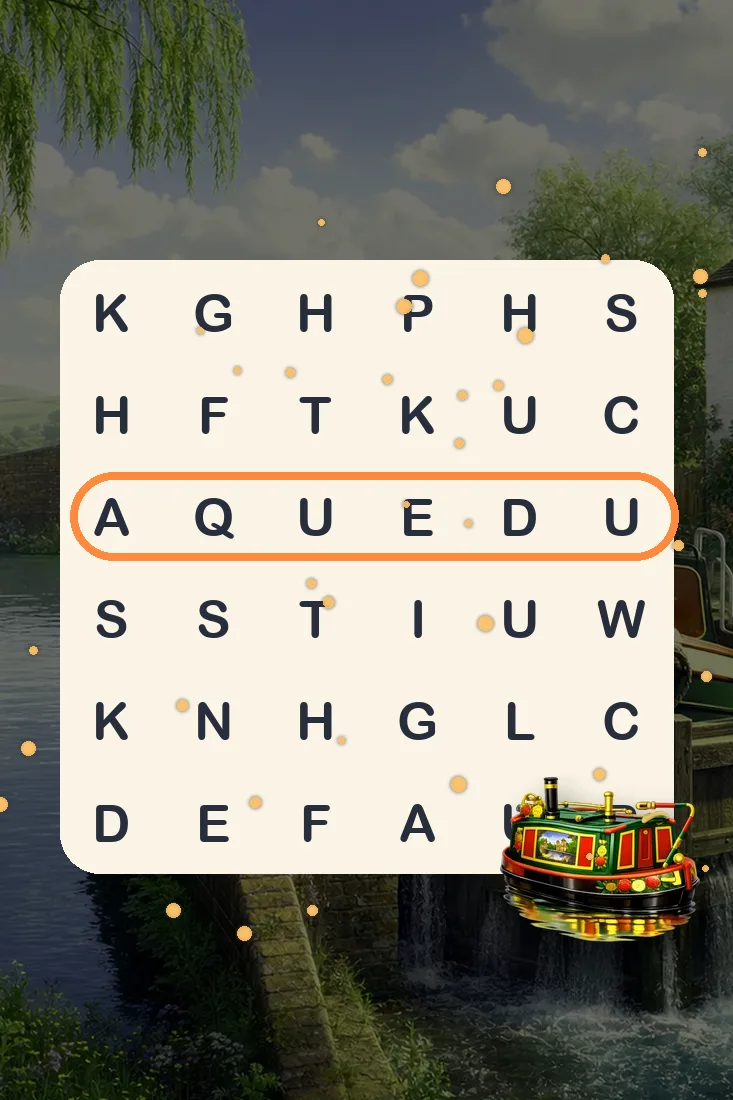
Logbook Word Hunt rewards a different kind of looking. Rather than reading every letter, try scanning for rare letters such as K, W, Y or Z, then check around them for the word you need. Longer words are easier to find than short ones because they cross so much of the grid, so start with those and leave the tiny three-letter ones for last.
The same pattern-spotting helps in Lockkeeper’s Tiles. Learn the landmarks of each picture: the red door of the keeper’s cottage, the curve of the humpback bridge, the line of bunting at the fete. Once you can recognise a tile at a glance, you spend far fewer moves hunting for it.
Like any skill, this improves with regular, gentle practice. Ten minutes on the daily word pack each morning will sharpen your eye faster than an occasional marathon session, and it is a much more pleasant way to learn. Before long you will catch yourself spotting words on lock signs and bridge plates as you walk along the water.
Chase your own bests, a little at a time
Every game keeps your personal best, and that number is your most useful guide. Rather than aiming for a huge leap, try to beat it by a small margin: one stroke fewer on the lock flight, one more rung on the cargo ladder, ten seconds off a word grid, a few more points on the towrope.
Small goals keep the games feeling fresh and make progress easy to see, and they spare you the frustration of measuring every session against your luckiest day. Come back after a week away and you will often find your hands remember more than you expect. Stars in the word hunt and slide puzzle work the same way, giving you a clear reason to replay a grid or picture for that missing star.
Most importantly, enjoy the journey. These games are designed for calm, steady play, and the best improvement comes from returning because you want to, not because you feel you must. Play when it is fun, rest when it is not, and the canal will reward you either way. Your bests will still be waiting in the logbook whenever you next step aboard.