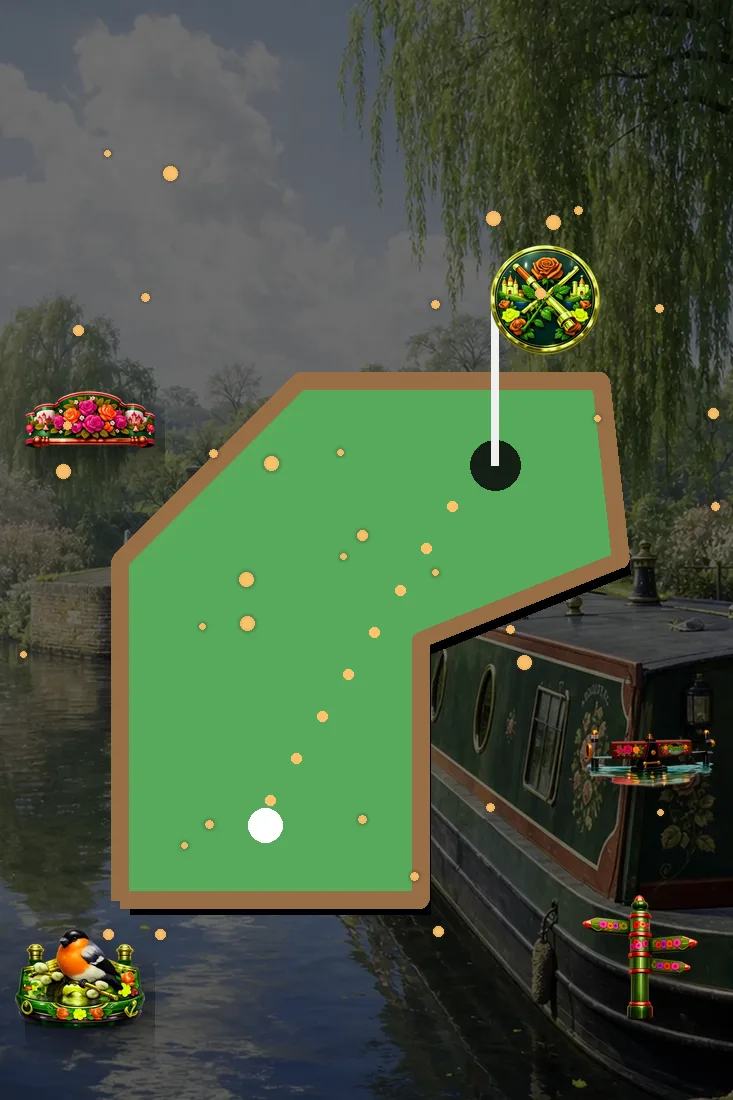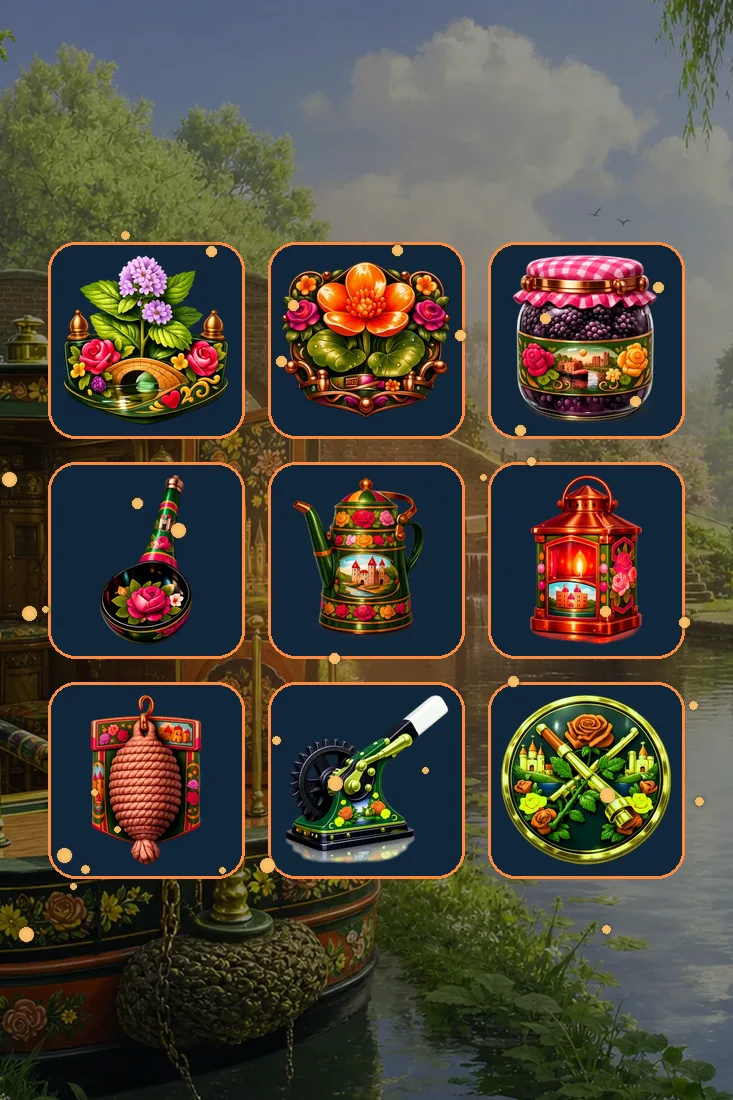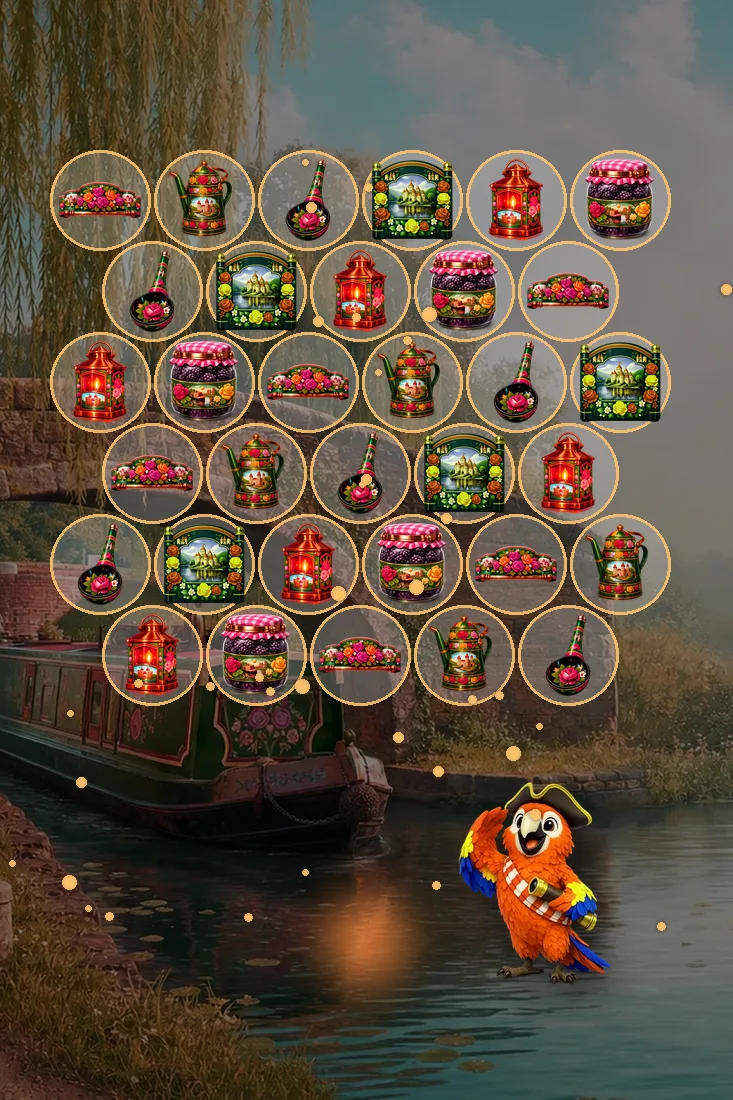
Narrowboat painters have decorated cabins with roses and castles for generations, and we borrowed the whole palette. Rosepaint Pop fills the top of the board with six painted pieces: rose garlands, rose water cans, painted ladles, castle panels, cabin lanterns and jars of blackberries. Pip the macaw stands by the launcher at the bottom, keeping a beady eye on your aim.
Point where you want the next piece to go and shoot. Pieces travel in straight lines and bounce off the side walls, so a careful bank shot can reach a gap you could never hit directly. Land a piece touching two or more of the same kind and the group pops. Anything that was hanging only from that group drops away too. Every few shots the ceiling lowers, so leaving clutter behind catches up with you.
How to play Rosepaint Pop
- Press Play on the start screen and look at the piece loaded in the launcher beside Pip.
- Move your pointer, or use the arrow keys, to aim along the dotted line towards the board.
- Shoot to land the piece next to two or more matching ones, popping the whole group.
- Bank off the side walls to reach awkward gaps, and aim for groups that hold up other pieces.
- Clear the board before the lowering ceiling pushes the pieces down to the launcher.
Rosepaint Pop controls
Getting better at Rosepaint Pop
- Look for the piece holding up a big cluster; popping it brings everything beneath crashing down at once.
- A bank shot off the wall often finds a gap that a direct shot would clip on its way past.
- Count your shots before the ceiling drops, and clear the lowest rows first when it is close.
- Do not chase every match; sometimes parking a piece neatly sets up a much bigger pop next turn.
- Glance at the next piece before shooting, so the current shot leaves room for what comes after.
Why roses and castles make perfect pieces
A good bubble shooter needs pieces you can tell apart in a split second, and canal art is wonderfully bold. A red rose garland, a blue castle panel, an amber lantern and a dark jar of blackberries each have their own shape and colour, so your eye sorts them before your brain has finished thinking. That leaves your attention free for angles.
We also liked the idea of a cabin wall slowly filling with decoration, only for you to clear it again with a well-placed shot. It is a little like repainting a boat each season: messy in the middle, deeply satisfying at the end, and something you are always happy to do once more before supper.
The art of the hanging cluster
Popping three is pleasant. Popping three and watching twenty more tumble because nothing holds them up any longer is the real joy. The best players hunt for these load-bearing pieces, often a single rose holding up half the board, and aim for them on purpose rather than settling for the nearest match.
Because the ceiling lowers every few shots, there is a gentle clock running in the background. It never rushes your aim, so you can take as long as you like lining up a shot, but each shot you spend without popping brings the board a notch closer. That small pressure is what keeps a calm game lively.
Questions about Rosepaint Pop
When a pop leaves pieces connected to nothing above them, they fall away and are cleared, which is easily the quickest way to empty a crowded board.
Every few shots the whole board lowers a step. It adds a gentle sense of urgency without ever rushing your aim, and it rewards shots that clear plenty of pieces at once.
Yes. Pieces bounce cleanly off the side walls, so a well-judged bank shot can slip into a gap that a direct line would never reach.