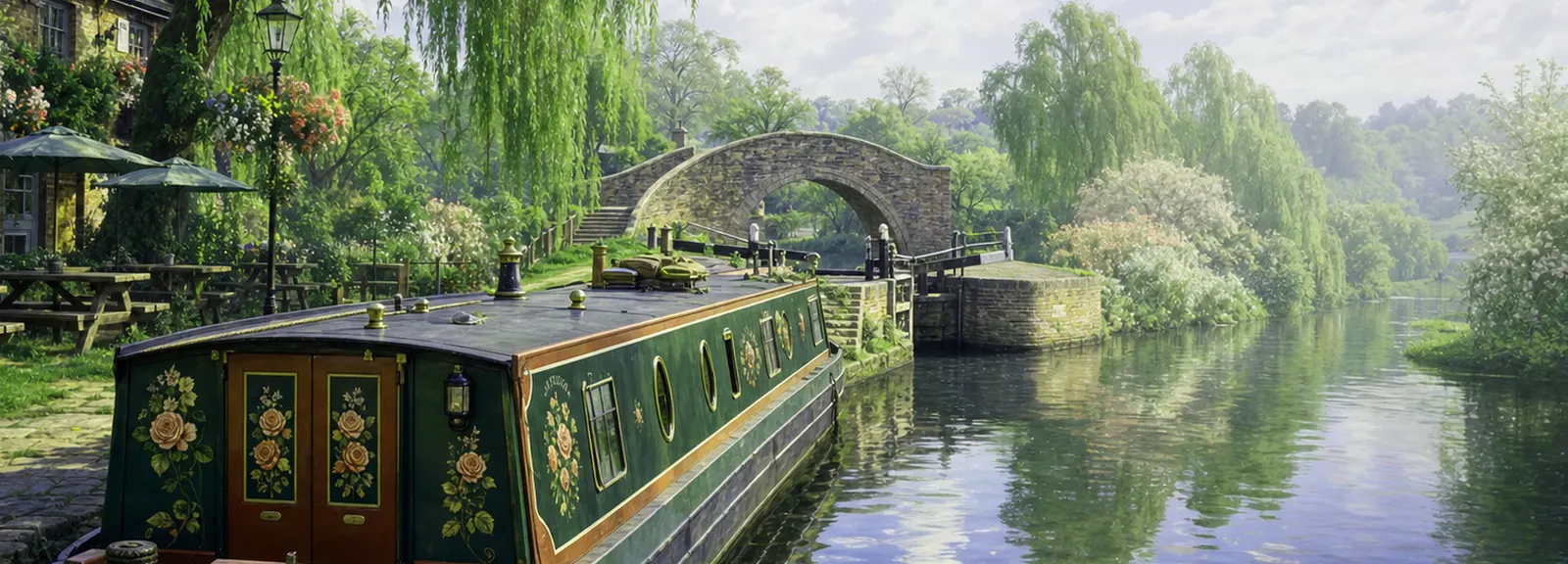
Four miles an hour is the speed limit on most British canals, and it is a fine speed for an afternoon of games too. Here is how our crew strings the six together.
Cast off with something short and bright
Every good trip starts with untying the ropes and getting the engine warm. For games, that means something short that wakes up your hands without asking too much of your head. Towrope Trail is ideal: a run lasts a minute or three, a mistake costs nothing but a restart, and by the third go your thumbs have remembered which way is which.
Rosepaint Pop works just as well as an opener. A couple of levels get your eye judging angles and your brain sorting colours, which happens to be excellent preparation for the golf later on. Keep it light. The aim is not a record, just a cheerful start that puts you in the mood to keep going.
If you only have ten minutes, this is a perfectly complete session on its own. One trail, one level of popping, and the kettle has boiled. There is no rule saying an afternoon needs all six games, and the canal will still be here tomorrow. Short sessions often turn out to be the ones you remember most fondly.
Settle into a puzzle once the kettle has boiled
With a mug in hand, it is time for something that rewards a slower mind. Towline Treasures is the natural choice. A board of cargo takes ten to twenty-five minutes, and its pace is entirely yours: no timer, no rush, just one slide after another and the ladder slowly lighting up beneath the board.
If merging does not appeal, open Logbook Word Hunt instead. Today’s log changes daily and makes a lovely ritual. Read the list, sip your tea, and let your eyes wander along rows and diagonals. When a word suddenly jumps out of the grid, there is a small, satisfying click in your head that never really gets old. Finish the grid, glance at your stars, and you will probably find yourself reaching for a second pack before the tea has gone cold.
Both games are good for talking over, too. Many of us play them with a partner or child beside us on the sofa, pointing at the board and arguing gently about the next move. Shared puzzling is one of the nicest ways to spend an hour, and it costs nothing more than a bit of patience.
Work the lock flight in the middle of the day
Lock Flight Golf asks for a little more focus, so we like to play it when we are fully warmed up. A round of nine holes takes ten to fifteen minutes, which is about the time it takes to work a short flight of real locks. Take each hole as it comes: look at the walls, watch the gates, then drag back and release.
The golf rewards a calm rhythm more than any other game here. Rushing a putt rarely helps, and a careless shot into the water costs a stroke. If a hole goes badly, let it go and focus on the next. A scorecard of steady pars is almost always better than a round of brilliant shots mixed with disasters.
Once you know the course, try playing a full round to beat your best total. That turns nine separate puzzles into one gentle challenge, and the improvement over a week or two is surprisingly visible. The holes stay the same here, so the more you play, the more you learn their quirks: which wall gives the kindest angle, which gate needs patience and which green hides a gentle slope.
Moor up for the evening with a picture
As the light fades, there is nothing quite like a long, quiet puzzle. Lockkeeper’s Tiles is our evening favourite. Pick a picture you love, perhaps the watercress beds or the willow arch, choose the 5x5 grid and let the tiles come home slowly. Hold Peek whenever you lose your way, and switch on Numbers if the sky starts to look all the same.
A 5x5 slide puzzle can easily fill half an hour, and that is part of its charm. There is no clock to beat unless you want one. The move counter quietly keeps score, and every finished picture earns at least one star, so the evening always ends with something to show for it. Leave the finished scene on screen for a moment before closing the lid; it is a small, pleasing reward for a patient half hour.
If a big grid feels like too much after a busy day, a 3x3 or 4x4 version of the same scene is a perfect nightcap. Finishing a small picture before bed is surprisingly restful, and it leaves the larger grid waiting for a weekend when you have more time.
Keep your own logbook of good days
Every game remembers your best on the device you play on. That gives you a simple, private record of how your skills are growing: a lower golf total on the lock flight, a higher cargo score, a faster daily log, a longer towrope. Glance at those numbers now and then and you will notice the steady improvement that comes from a little regular play.
We find it helps to pick one game a week to focus on, while dipping into the others for fun. One week might be all about pars on the lock flight; the next, about three stars on every 4x4 picture. A gentle focus keeps things fresh without turning play into homework.
Most of all, remember that these games are built to be enjoyed at canal pace. There is no fixed schedule and nothing to keep up with. Come aboard when you have a spare moment, leave when the kettle calls, and the boat will be waiting where you moored it.